

The Plastic Abstraction
From Conspicuous Consumption to Inconspicuous Debt

The abstraction that made visible status spending possible.
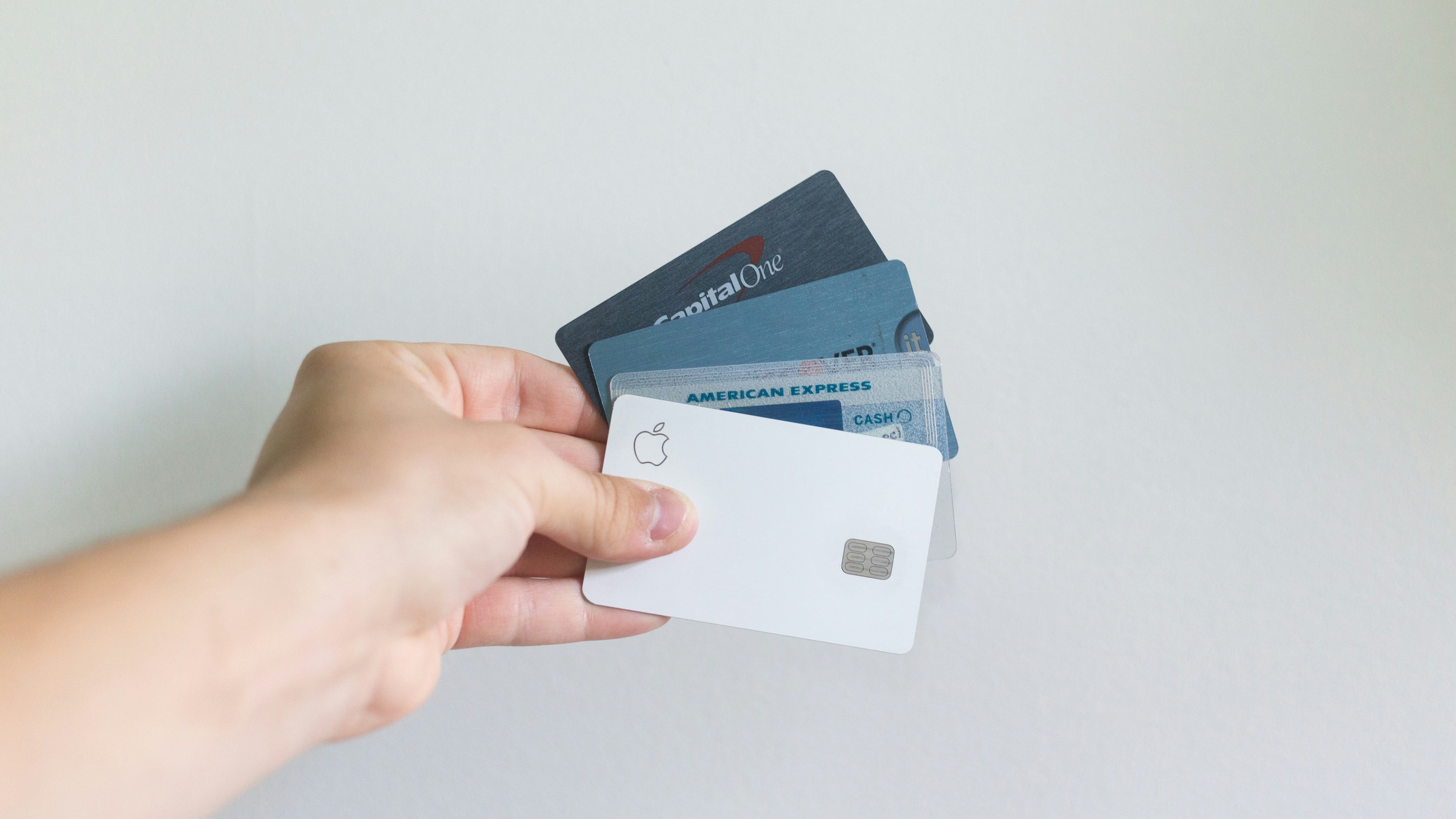
How Bank of America accidentally created the consumer debt society
The mailman arrived in Fresno, California, on September 18, 1958, carrying something that would change American life more profoundly than almost anyone imagined. Sixty thousand residents opened their mailboxes to find an unexpected gift: a small plastic card embossed with their name and the words “BankAmericard.”
There was no application. No credit check. No request. The card simply arrived, ready to use, offering between $300 and $500 in instant credit—equivalent to about $3,000 to $5,000 today. Bewildered Fresnans gathered at stores like Florsheim Shoes just to watch people actually use the strange new cards to buy things without cash.
The fintech world still calls this “The Drop”—the moment that launched the plastic revolution. As one historian put it: “There had been no outward yearning among the residents of Fresno for such a device, nor even the dimmest awareness that such a thing was in the works. It simply arrived one day with no advance warning as if it had dropped out of the sky.”
Bank of America had launched what would become the most significant “accident” in consumer finance history. They thought they were creating a regional convenience product for California customers. They actually created a consumer debt society—transforming Americans’ relationship with money, spending, and their own futures.
Within thirteen months, two million cards were in circulation. Within two decades, the plastic revolution had reshaped American capitalism. And within a generation, Americans would carry an average of $10,000 in credit card debt, unable to imagine life without the little pieces of plastic that Bank of America’s Joe Williams had thought would just be a nice service for existing customers.
The Problem Nobody Asked For
Joe Williams ran Bank of America’s “Customer Services Research Department”—essentially the bank’s internal think tank. In the mid-1950s, he was watching his competitors and saw an opportunity.
Diners Club had launched in 1950 as a “charge card” for businessmen—you could take clients to dinner and pay at the end of the month. The origin story, though possibly apocryphal, had become legend: businessman Frank McNamara hosting a lavish dinner, realizing he’d forgotten his wallet, calling his wife to speed into Manhattan with cash to save face. Whether true or not, the story captured a real pain point for the business class.
American Express and Carte Blanche followed in 1958. But these weren’t really credit cards. You had to pay the full balance within 30 days. They were more like short-term IOUs than actual loans. And here’s something remarkable about American Express that nobody remembers: it was founded in 1850 by none other than Henry Wells and William Fargo—the same Wells and Fargo who would go on to found the famous bank.
American Express started as a Pony Express–style mail company, moving stuff around the Wild West.
Meanwhile, individual stores like Sears and Macy’s operated their own credit systems. You could buy on installment at Sears, but only at Sears. Each merchant maintained expensive bookkeeping operations, tracking thousands of customer accounts, sending bills for amounts as small as $4.58, and waiting months for payment.
Williams saw inefficiency everywhere. Customers needed credit from multiple stores. Merchants wasted money on accounts receivable. Banks handled neither the consumer lending nor the merchant relationships.
What if, Williams wondered, you could create a single card that worked everywhere? A “universal credit card” that would give customers instant purchasing power while earning the bank fees from merchants and interest from cardholders?
It seemed like a win-win-win: customers got convenience, merchants got more sales and eliminated bookkeeping headaches, and Bank of America got a new revenue stream. Nobody thought it would fundamentally transform how Americans related to money itself.
The Fresno Experiment
Williams faced a classic chicken-and-egg problem: merchants wouldn’t accept a card that no customers had, and customers wouldn’t want a card that no merchants accepted. His solution was audacious: create both sides of the market simultaneously through a massive “drop.”
Fresno was the perfect test market. Population 250,000—big enough to matter, small enough to control. Forty-five percent of Fresno families banked with Bank of America, providing a natural customer base. And crucially, Fresno was relatively isolated. If the experiment failed, the embarrassment could be contained. The San Francisco newspapers wouldn’t care much about a flop in Fresno.
But the Fresno drop wasn’t even the first unsolicited credit mass-mailing in American history. That honor belonged to Standard Oil of Indiana, which in 1939—nearly two decades earlier—had sent 250,000 unsolicited cards to its customers. The difference was that Standard Oil’s cards only worked at Standard Oil stations. Williams was attempting something far more ambitious: a universal card that worked everywhere.
Starting in March 1958, Bank of America representatives fanned out across Fresno, signing up merchants. The pitch was hard: accept BankAmericard or lose sales to competitors who did. The 6% merchant fee was steep—department stores like Sears and Montgomery Ward refused to accept it, seeing the card as competition for their own credit programs. But smaller retailers, especially those drowning in bookkeeping costs, signed up. Florsheim Shoes became the first major chain to accept the card.
By September, more than 300 Fresno merchants had agreed. That’s when Bank of America dropped the other shoe—or rather, dropped 60,000 credit cards into Fresno mailboxes.
September 18, 1958: The Fresno Drop. No warning. No application process. Just a card in the mail with your name on it and instant access to hundreds of dollars in credit.
The design of the card itself would become iconic. The story goes that the B of A employee tasked with designing the card lived in Pleasanton, California. One fine spring morning, he looked out his back door at the local hillside: the sky was a beautiful blue with white puffy clouds, and the hill was covered with beautiful golden California poppies in bloom. He rushed inside and painted an abstracted version—three horizontal bands of blue, white, and gold. Those three stripes would eventually become the Visa logo recognized worldwide.
The brilliance of the strategy was that it bypassed the chicken-and-egg problem completely. On day one, thousands of cardholders existed. Merchants couldn’t afford not to participate. The network effect was instant.
Within three months, Bank of America expanded to Modesto and Bakersfield. A competing bank was preparing a San Francisco drop, forcing Bank of America to move faster than planned. Within a year, Los Angeles and San Francisco joined the program. Thirteen months after Fresno, 2 million BankAmericards were in circulation in California, accepted at 20,000 merchants.
The plastic revolution had begun. But nobody—least of all Joe Williams—understood what they’d actually unleashed.
The Immediate Disaster
Williams had made one critical miscalculation: he assumed people were fundamentally responsible with credit.
He’d projected that delinquencies would run around 4%, in line with the bank’s traditional loan portfolio. He figured existing credit systems would handle collections easily. He thought giving people credit cards would just make payments more convenient.
He was catastrophically wrong on all counts.
Within months, the BankAmericard program was hemorrhaging money.
Delinquencies hit 22%—more than five times Williams’ optimistic projection. Customers who’d never borrowed before suddenly had hundreds of dollars in credit and no idea how to manage it. Or worse, they knew exactly how to max it out and disappear.
Williams had committed a cardinal sin of entrepreneurs: assuming his particular situation was a pattern that would apply to all future customers.
Bank of America had extensive experience with secured lending—loans backed by collateral like houses or cars. If someone defaulted on a refrigerator loan, you could repossess the refrigerator. But credit card debt was unsecured. There was no collateral. You couldn’t repossess a restaurant meal or a tank of gas.
Fraud exploded. The cards were laughably easy to counterfeit—just embossed plastic with a signature on the back. Criminals quickly figured out they could replicate cards, create fake identities, and run up charges before anyone noticed. Police departments across California confronted waves of a brand-new crime: credit card fraud.
Merchants revolted against the 6% fee, especially after realizing that Bank of America held all the power. If you wanted to stay competitive, you had to accept the card. If you accepted the card, you paid the fee. There was no negotiation.
The cardholder agreement made things worse: customers were liable for all charges, even fraudulent ones. When a stolen card ran up hundreds in charges, the cardholder got the bill. Public outrage followed. Politicians and journalists attacked Bank of America for unleashing financial chaos.
Less than two years after the Fresno Drop, Joe Williams resigned. Bank of America had officially lost $8.8 million. When accounting for advertising and overhead, the real loss was probably $20 million—equivalent to $200 million today.
The credit card looked like a colossal failure. Most observers expected Bank of America to quietly kill the program and write it off as an expensive mistake.
They kept it going. And that decision would change everything.
The Turnaround Nobody Saw
After Williams left, Bank of America management conducted what they called a “massive effort” to salvage the BankAmericard. They imposed proper financial controls—something Williams, who’d never worked in the bank’s loan department, had failed to establish. They built actual collections and fraud departments. They published an open letter to three million California households apologizing for the chaos and promising reforms.
Most importantly, they fundamentally changed the cardholder agreement. Instead of making customers liable for all fraud, Bank of America limited liability to $50, allowing the bank to absorb fraud losses while dramatically improving public perception.
By May 1961, just three years after the Fresno Drop, the BankAmericard program turned its first profit: $179,000. Not much, but proof the concept worked.
Bank of America kept this information secret. They deliberately let negative impressions linger, hoping to discourage competitors. For five years, they quietly refined the program, expanded the merchant network, improved fraud detection, and figured out the economics of revolving credit.
The secrecy worked remarkably well. From 1960 to 1966—the entire era when BankAmericard was actually profitable—only ten new credit cards were introduced in the entire United States. Banks saw the newspaper headlines about B of A’s losses and abandoned their own credit card plans. The negative press was the best competitive moat Bank of America could have asked for.
By 1966, BankAmericard’s profitability was too big to hide. That year, the program generated millions in profits. Other banks took notice.
Once the secret got out, the floodgates opened. From 1966 to 1968—just two years—approximately 440 credit cards were introduced by banks large and small throughout the country. The gold rush was on.
The problem was that BankAmericard only worked in California—Bank of America was still a state-chartered bank. To go national, they’d need other banks to issue cards. But no bank wanted to promote another competitor’s brand.
The solution was ingenious: Bank of America began licensing the BankAmericard name to banks nationwide, creating a cooperative network. They charged a $25,000 franchise fee plus a percentage of gross transaction revenues, literally like McDonald’s franchising, but for financial services.
Bank of America executives must have been throwing parties. Their empire dreams were coming true: all these other consumer banks would essentially become serfs in their kingdom. But the franchising model contained the seeds of its own transformation, and the entry of the most unlikely revolutionary in banking history.
The Chaos of Franchising
As Bank of America expanded nationwide, the licensee banks discovered a horrifying truth: Bank of America had sold them a marketing program, not an operating system.
Within California, Bank of America controlled both sides of every transaction—they were the cardholder’s bank and the merchant’s bank. Money never left their hands. But once the network expanded beyond California, different banks served cardholders and merchants. Suddenly, you needed a way to settle transactions between banks.
The franchisee banks approached Bank of America and asked, “How did you build the technology to do this?” Bank of America’s response was essentially: “We didn’t have that problem because, in our corner of the world, we’re the bank on both sides.” Sounds like a you problem, not a me problem.
It was like buying a McDonald’s franchise and having them ship golden arches with a note saying, “Good luck figuring out how to make cheeseburgers.”
The banks had to resort to methods from the 1800s. Each bank would collect sales drafts from their merchants, then physically mail them around the country to the issuing banks to collect the money. There was no standardized discount fee—just whatever they could negotiate with one another, case by case. It was chaos.
In October 1968, the tensions exploded. The franchisee banks demanded a summit in Columbus, Ohio, to air their grievances. This was becoming existential for their businesses—they were racking up huge losses trying to make this system work. They sent senior representatives, everyone running their card programs.
Bank of America sent two mid-level marketing managers.
These poor guys faced literal pitchforks. The franchisees were incensed both because the situation sucked and because B of A couldn’t be bothered to take them seriously. Right before lunch on the second day, the B of A guys tried a classic delay tactic: let’s appoint a committee to “investigate” the problems and report back to us in San Francisco.
Unfortunately for their goals, one of the people put on that committee was the BankAmericard program manager from a small bank in Seattle called the National Bank of Commerce. His name was Dee Hock. And he would become the most improbable founder in the history of finance.
The Accidental Revolutionary
Dee Hock was everything the JP Morgan banker establishment was not. Raised in rural Utah, basically in poverty during the Depression. He didn’t go to a four-year college—only had an associate’s degree. He’d bounced around consumer finance jobs on the West Coast, getting fired from multiple positions because he was too insubordinate.
But Hock was also brilliant in ways that defied his resume. Self-taught, voraciously well-read, he’d started reading every book on his little farm in Utah when he was seven years old. And here’s the crucial detail: bad at sports in high school, he’d gotten into competitive debate instead. The skills he learned there—persuasion, argumentation, relentless logic—would transform the financial industry.
During lunch at the Columbus summit, Hock approached the B of A representatives with a radical proposal. Instead of the committee simply compiling a list of grievances, what if they designed and proposed an entirely new way to operate the whole system? The B of A guys, desperate to escape the mob, agreed. They probably thought nothing would come of it—committees rarely produce anything.
They were catastrophically wrong.
Hock took his committee to Sausalito, California, just north of San Francisco. There, overlooking the bay, they dreamed up something unprecedented: a global payment network that would be owned by no single entity, governed democratically by all participants, and operated through technology that didn’t yet exist.
Hock had this amazing quote about what he envisioned: “Any organization that could guarantee, transport, and settle transactions in the form of arranged electronic particles 24 hours a day, 7 days a week around the globe, would have a market for every exchange of value in the world that beggared the imagination. The necessary technology had been discovered and would be available. But there was a problem. No bank could do it. No hierarchical stock corporation could do it. No nation-state could do it. In fact, no existing form of organization we could think of could do it.”
The solution? Create an entirely new form of organization. Hock called it a “chaordic” structure—chaos and order combined. The banks would compete fiercely with each other for customers while collaborating on the network infrastructure. It would be a for-profit, non-stock membership corporation—a reverse holding company where the subsidiary banks owned the parent organization.
Now came the impossible part: convincing Bank of America to give up its crown jewel.
The Greatest Sales Pitch in Banking History
Dee Hock walked into the Bank of America boardroom in San Francisco to stand toe-to-toe with the Vice Chairman. He was a nobody—a mid-level program manager from a small Seattle bank. He had an associate’s degree and a history of getting fired for insubordination. And he was about to deliver the most audacious pitch in banking history.
His argument was pure game theory: you should give me the BankAmericard program because it is in your self-interest to do so.
The pitch went like this: Would you rather own 100% of a regional California card network? Or would you rather own a percentage of something that becomes the default global way that commerce is conducted? The value of a truly universal payment network would be so astronomical that your fractional ownership would be worth far more than your total ownership of what you have now.
Hock had a favorite saying from his debate days: “Until someone has repeatedly said no and adamantly refuses another word on the subject, they are in the process of saying yes and don’t know it.”
Miraculously, it worked. Bank of America agreed. Nobody in the world would have thought this could happen. The largest bank in America, giving up its most precious asset to a nobody from Seattle. But that was precisely why it worked—if Hock had been a senior executive from another major bank, B of A would never have trusted him. They would have lost face subordinating themselves to a potential equal. Hock’s outsider status was his greatest asset.
Now Hock faced an even harder challenge: convincing every other bank to join his new organization. He hit the road, meeting with bank after bank to make his case. His pitch to them was different: yes, you’ll have to give up exclusivity in your territory. Yes, your competitors can join the network. But the network effects will be so powerful that your share of a massive pie will dwarf your ownership of a small one.
Every single bank signed up. Not one jumped ship. Over 200 banks, and not a single defection.
In 1970, they formed National BankAmericard Inc., with Hock as CEO. But they still had a problem: the name “BankAmericard” wouldn’t work internationally. Hock held an internal contest, offering a $50 prize for the winning name. So many people submitted “Visa” that when they finally chose it, Hock wrote out the $50 check to “everyone in the company.”
Visa. In every language on earth, it means the same thing: your entry pass. Your permission to cross borders. Universal, global, self-explanatory. Nike was a great name. Visa might be the most perfect name in business history.
The rebranding became a massive growth hack. Banks were required to switch all BankAmericards to Visa cards within two years. Some banks saw this as an opportunity to poach customers from competitors, sending letters to cardholders at other banks. This sparked an arms race. In just one year—1977 to 1978—the number of Visa member banks grew by 20%, and active cardholders grew by 45%.
A competing network called Master Charge (later MasterCard) formed around the same time. Together, these two networks would come to dominate global payments—all descended from that first Fresno Drop in 1958.
But the cards themselves were just infrastructure. The real revolution was what they enabled: a fundamental transformation in how Americans thought about money, spending, and debt.
From Thrift to Revolving Credit
Before credit cards, American consumer culture operated on a simple principle: you earned money, then you spent it. If you needed something expensive—a refrigerator, a car, a washing machine—you saved up or got an installment loan for that specific purchase.
Credit existed, but it was treated seriously. You went to the bank, sat across from a loan officer, explained why you needed the money, provided collateral, and signed documents you understood would follow you for years. Credit was consequential.
Store charge accounts were different—merchants extended credit to regular customers as a convenience and as part of a loyalty program. But you settled accounts regularly, often monthly. Running a balance was embarrassing, a sign you were living beyond your means.
Credit cards changed everything by making debt invisible, convenient, and perpetual.
The genius—or curse—of the credit card was “revolving credit.” You didn’t pay off the balance monthly like a charge card. You didn’t have a specific loan with a particular purpose, like installment credit. Instead, you had a credit line you could use and reuse indefinitely, paying interest only on the outstanding balance.
This seemed beneficial: flexibility! You decide how much to pay each month based on your circumstances. You’re in control.
But revolving credit had a psychological effect nobody anticipated: it divorced spending from financial reality.
With cash, you physically felt money leaving your wallet. With checks, you record transactions and reconcile your checkbook. With installment loans, you understood exactly what you owed and when it would be paid off.
With credit cards, spending became abstract. The plastic came back after each purchase. You could buy things without experiencing any immediate sense of loss. The bill arrived weeks later, showing an incomprehensible number that bore little relationship to individual purchases. And you could pay just the minimum—often $10 or $20—making even large debts feel manageable.
By design, credit cards made it easy to spend and psychologically difficult to grasp the consequences. This wasn’t a conspiracy—it was just how the system worked. But the effects were profound.
How It Actually Worked (Or Didn’t)
Here’s something most people don’t realize about early credit cards: they barely worked.
Even into the 1990s, using a credit card was considered cumbersome and slightly shameful. There’s a remarkable TV segment from 1993—yes, 1993—announcing that Burger King had started accepting credit cards. A woman interviewed said, “I think it’s pretty sad when you have to use a credit card when you go to a fast food restaurant.” Another customer worried: “I just hope it doesn’t slow things down, because they’ll have to call New York, and then they’ll have to do the thing.”
That customer wasn’t being paranoid. For transactions above a certain “floor limit”—maybe $50—cashiers literally had to call up their bank, which would call the customer’s bank, to verify the credit was good. The process could take twenty minutes. And it didn’t work outside of business hours.
Imagine trying to buy something in Japan with a card issued by an American bank. The Japanese merchant bank calls your American bank—only to be told it’s closed for business. Transaction denied.
This is where Visa’s technology story becomes crucial. After Hock formed the organization, he had to build the actual infrastructure to make global payments work. In 1971, he launched a project called BASE (BankAmericard Authorization System Experimental) to automate transaction authorizations.
He gave his tech team nine months to build a nationwide telecom network, install computer systems in every member bank, train all the staff, and build a centralized data center. They did it!
That data center was built in San Mateo, right off Highway 101 between San Francisco and Silicon Valley. You can still see it today. Visa isn’t headquartered in New York like the big banks. It’s a Silicon Valley company, born in the same time and place as Intel, Atari, and Apple. The only difference? No venture capital, and it didn’t make anyone rich except the banks, who already were.
One of Visa’s engineers realized they had a serious vulnerability: all their technology ran on one computer in one data center made of wood, sitting on a hillside with dried grass, right by a freeway, below a parking lot perched on a cliff, about a mile from the San Andreas Fault. He went to Hock with concerns about redundancy.
In true Hock fashion, the CEO thought about it over the weekend and came back Monday with new orders: “You now have a new job. Go move somewhere on the East Coast—I don’t care where—find a site to build a redundant data center, and have it done within six months.”
The engineer did it. But more importantly, he invented something revolutionary: instead of the backup data center being dormant cold storage that only activated during failures, Visa’s system ran concurrently across multiple data centers as shared operations. This was the first time anyone had done this. Today, every major data center in the world operates this way.
Here’s something wild: at the exact same time Visa was building their automated clearing system for card transactions, the San Francisco branch of the Federal Reserve was building ACH—Automated Clearing House—for checks. Same place, same time, solving the same problem. Nobody knows if they ever talked to each other.
The final piece was digitizing the point-of-sale system—the magnetic stripes on cards and the terminals that read them. Visa created the spec, and companies like Verifone manufactured the terminals. To incentivize merchants to adopt the new technology, Visa gave them discounts on transaction fees for using digital terminals instead of the old zip-zap imprint machines. (remember those?)
That business model carries through today: how you charge a card affects your interchange fees. Swiping costs less than keying in. Chip costs less than swipe. The technology innovation was inseparable from the business model innovation.
The Transformation Nobody Planned
In 1958, when Bank of America mailed those first 60,000 cards, consumer credit mostly meant installment purchases of specific items. You bought a refrigerator on a payment plan. You got a car loan. Credit was tied to concrete things you needed.
By 1970, more than half of U.S. households had at least one credit card. Revolving credit—mostly credit cards—totaled $5.1 billion, accounting for 3.8% of total consumer credit.
By 1980, credit cards had become ubiquitous. The average household carried over $700 in revolving credit (equivalent to about $2,500 today). More importantly, carrying a balance became normalized. Credit card debt wasn’t shameful anymore—it was just how things worked.
By 2000, two-thirds of American households used bank-issued revolving credit. That number had been one-sixth in the 1970s. Credit card debt topped $600 billion.
By 2020, Americans carried over $900 billion in credit card debt—about $10,000 per household with a card. And that was just credit cards, not counting mortgages, car loans, or student debt.
The numbers tell the story of transformation, but they don’t capture the deeper change: Americans had fundamentally altered their relationship with money itself.
Before credit cards, spending meant depleting a finite resource. You had money or you didn’t. If you didn’t, you waited. Consumption was limited by income.
After credit cards, spending meant accessing a revolving line of credit. You always had purchasing power, regardless of income. Consumption was limited only by your credit limit—and banks kept raising those limits, often without being asked.
This had enormous economic consequences. Consumer spending became less constrained by wage growth. When incomes stagnated in the 1970s and beyond, credit cards enabled consumption to continue rising. Americans could maintain—or increase—their standard of living even when their wages didn’t keep up.
This kept the economy growing. Consumer spending drives about 70% of U.S. GDP. Credit cards enabled that spending even when underlying economic conditions suggested it should slow. From the economy’s perspective, credit cards were miraculous: they prevented consumption crashes and kept money flowing.
But they also meant that Americans were increasingly living beyond their means, borrowing from their future selves to maintain present consumption. The plastic revolution didn’t just change how people paid—it changed when they paid, and who bore the costs.
The Unintended Prisoners
By the 1980s, credit cards had created a new kind of economic relationship. Banks didn’t just lend money—they managed ongoing relationships with millions of consumers, each carrying a revolving balance that generated perpetual interest income.
The economics were extraordinary. Banks paid depositors maybe 2-3% interest on savings. They charged credit card holders 15-20% interest on balances. The spread—the profit margin—was enormous. Even accounting for defaults and fraud, credit cards were wildly profitable.
And they were self-reinforcing. Once you carried a balance, paying it off became difficult. Interest accumulated. Minimum payments barely covered the interest, leaving the principal untouched. Unexpected expenses—car repairs, medical bills—were added to the card, further increasing the balance.
Meanwhile, banks sent pre-approved offers by the millions. Got one card maxed out? Here’s another! Need to consolidate? Here’s a balance transfer offer! Each new card provided temporary relief while deepening long-term dependence.
Credit cards became an essential part of modern life. Hotels and car rental agencies required them. Online shopping demanded them. Building credit history meant using them. Not having a credit card made you economically suspect—what were you hiding?
The system had created a new kind of servitude: voluntary, invisible, perpetual. Nobody forced you to use credit cards. You chose to. But once you started, extraction occurred automatically, monthly, indefinitely.
Interest payments drained wealth from millions of households to financial institutions, redistributing money upward with mechanical efficiency.
The plastic revolution had accidentally created a system where ordinary Americans’ consumption was increasingly financed by debt, their discretionary income diverted to interest payments, their financial futures mortgaged to maintain present lifestyles—all through little pieces of plastic that arrived unsolicited in the mail one September day in Fresno.
The Empire Nobody Owns
Here’s a question Dee Hock loved asking audiences: How many of you know Visa? Every hand would go up. Now, how many of you know how it started? Every hand would go down. Who runs it? Where is it headquartered? What’s its business model?
For being the 11th largest company in the world by market cap—worth more than any bank on earth, including every bank that created it—Visa’s story is shockingly unknown.
This is what makes Visa’s accident so different from Bank of America’s original accident. Visa doesn’t extend credit. They don’t issue cards. They don’t work directly with merchants. They don’t work directly with consumers. They’re not a bank or financial institution. They don’t bear any risk.
They are merely a network connecting banks to other banks. And for this service—for processing transactions at 50%+ net income margins on $30 billion in revenue—they’ve become one of the most profitable companies on earth.
The business model is elegantly simple. Every time you swipe your card, the merchant pays a “merchant discount rate”—usually 2-3% of the transaction. That fee gets split between your issuing bank (the largest share), the merchant’s acquiring bank, and Visa (a smaller network fee).
Visa’s cut is tiny per transaction, but they process billions of transactions.
The whole system incentivizes everyone to keep it going. Banks make money from interest and their share of interchange. Merchants lose money on fees but gain sales from customers who spend more with cards than cash. Consumers get convenience, rewards, and fraud protection.
Visa takes its toll on every transaction.
In 2008, Visa went public—one of the largest IPOs in history. The non-stock membership corporation became a publicly traded company. The banks that had owned it received shares they could sell. The structure Dee Hock created had transformed again.
Today, you can show up anywhere in the entire world with a piece of plastic—or just tap your phone—and transact for anything you want in any currency. The merchant doesn’t need to know you or trust you. You don’t need to know or trust the merchant. Visa sits invisibly in the middle, guaranteeing the transaction happens and taking their fraction of a percent.
It’s precisely what Dee Hock envisioned in that hotel room in Sausalito in 1968. It’s exactly what nobody else thought was possible.
What Bank of America Wrought
Joe Williams thought he was solving an inefficiency in payment systems.
He saw merchants wasting money on bookkeeping and customers inconvenienced by multiple store accounts. He created a technological solution: a universal payment instrument that would make commerce more efficient.
He succeeded beyond his wildest dreams. Credit cards did make payments more efficient. They did reduce merchant bookkeeping costs. They did provide convenience.
But they also transformed American capitalism in ways nobody planned or predicted:
They divorced consumption from income. Spending no longer required having money—just having credit. This kept the economy growing even when wages stagnated, but it did so by converting wage-earners into debtors.
They created a new extraction mechanism. Interest on revolving credit became a massive transfer of wealth from consumers to financial institutions. Millions of Americans pay hundreds or thousands per year in credit card interest—money that doesn’t buy anything, doesn’t build equity, just services debt.
They normalized debt. Before credit cards, being “in debt” was embarrassing, a temporary condition you worked to escape. After credit cards, carrying a balance became ordinary, expected, even encouraged.
Debt transformed from crisis to lifestyle.
They made financial institutions central to daily life. Your credit score determines whether you can rent an apartment, get a car loan, or even get a job. Banks don’t just hold your savings—they mediate your participation in the economy. You can’t function in modern America without financial industry approval.
They created psychological distance from spending. The abstraction of plastic—swipe, tap, click—makes spending feel less real than handing over cash. This psychological effect encourages consumption beyond what people would spend if they had to count out bills.
They enabled consumption to outpace production. American households could buy more than they earned, year after year, by drawing on credit.
This sustained economic growth but created a structural dependence on ever-expanding consumer debt.
None of this was intended. Bank of America wanted to create a convenient payment system and earn some fees. They didn’t set out to transform the American relationship with money, debt, and consumption. They certainly didn’t plan to create an economy structurally dependent on consumer credit.
But that’s what accidents do: they produce unintended consequences far beyond original intentions. The Fresno Drop seemed like a clever marketing experiment—mail out cards, sign up merchants, capture the California market. Instead, it was the first domino in a transformation that would reshape American capitalism.
The Logic Takes Over
Once credit cards worked, the logic of expansion became irresistible.
Banks that didn’t offer cards lost customers to banks that did. Merchants that didn’t accept cards lost sales to those that did. Consumers without cards found themselves unable to participate fully in the economy.
Competition drove the system toward excess. Banks competed by lowering credit standards, raising credit limits, and approving more applicants. They marketed aggressively, carpet-bombing mailboxes with pre-approved offers. They targeted college students, people with bad credit, anyone with a pulse and a mailing address.
Why the aggressive expansion? Because the economics worked. Yes, some cardholders defaulted. But the interest rates were high enough that profitable customers more than covered deadbeats. And the more cards in circulation, the more transactions, the more fees, the more interest income.
Financial innovation accelerated the cycle. Banks learned to securitize credit card debt—bundle thousands of accounts together and sell them as bonds to investors. This moved risk off bank balance sheets and freed up capital to issue more cards. By the late 1980s, credit card debt had become a tradable asset class, just like mortgages and car loans.
The system became self-sustaining. Securitization created demand for more debt. More debt required more cardholders. More cardholders generated more securitizable debt. The financial industry built an entire infrastructure around the assumption that Americans would perpetually carry revolving credit balances.
And they did. By 2000, paying off your credit card balance made you a “deadbeat” in industry jargon—a customer who used the service but didn’t generate interest income. The profitable customers were “revolvers”—people who carried balances month after month, year after year, paying interest indefinitely.
The system’s ideal customer wasn’t someone who used credit responsibly and paid it off. It was someone who borrowed continuously, paid enough to avoid default, but never enough to escape the debt. Maximum extraction, minimum risk.
This wasn’t a conspiracy—it was just a rational business operation within the system’s logic. But the aggregate effect was an economy increasingly dependent on consumer debt, a population trained to spend beyond its means, and a financial sector profiting enormously from the gap between American incomes and American consumption.
The Fresno Ghost
In 2020, when the pandemic briefly interrupted American consumption, the fragility of the credit-dependent system became visible. Millions couldn’t make minimum payments. Defaults spiked. The revolving credit system that had seemed eternal suddenly looked vulnerable.
The government’s response was telling: send stimulus payments, enhance unemployment benefits, provide forbearance, and keep spending going.
Because the American economy wasn’t just dependent on consumption—it was dependent on debt-financed consumption. If Americans stopped using credit cards, if they paid down balances instead of carrying them, the entire system would have to adjust.
The credit card—that little piece of plastic that arrived unsolicited in 60,000 Fresno mailboxes on September 18, 1958—had become essential infrastructure. Not just convenient but necessary. Remove it and the economy would stumble.
This was the accident Bank of America never intended: creating a system that worked so well it became indispensable, that provided such convenience it became compulsory, that generated such profits it became structural.
Joe Williams just wanted to make payments easier and earn Bank of America some fees. He launched an experiment in a small California city where failure could be contained. Instead, he unleashed a revolution that would transform American capitalism, creating a consumer economy built on debt, a financial sector extracting wealth through interest payments, and a population dependent on credit to maintain lifestyles beyond their incomes.
The Fresno Drop succeeded beyond imagining. It solved the problem Williams identified—payment inefficiency—and created dozens of problems nobody anticipated. It made commerce more convenient and made Americans more vulnerable. It enabled consumption and enabled exploitation.
Sixty-seven years later, the average American carries multiple credit cards, owes thousands in revolving credit, and can’t imagine life without plastic in their wallet. They’ve forgotten—or never knew—that the system wasn’t inevitable, wasn’t planned, wasn’t designed to work this way.
It was an accident. The plastic abstraction that reshaped American life started as a marketing experiment in Fresno, California, intended to capture a regional market and make some money for a local bank.
Instead, it captured the nation, reshaped the economy, and created a new form of financial relationship where Americans became perpetual debtors, banks became perpetual creditors, and the gap between income and consumption became the engine of economic growth and the source of household fragility.
Bank of America called it BankAmericard. They mailed it to 60,000 Fresnans who never asked for it. Dee Hock transformed it into something nobody thought possible.
And America has been paying interest ever since.